Roulette in 2026: Rules, Odds, House Edge, Live Dealer Formats and the Australian Legal Reality

Last reviewed and updated: February 2026 · Editorial standard: every claim in this guide is tied to a number, a rule, a formula or a named source. General information only, not legal, financial or medical advice.

The 30-second version

Roulette is a fixed-odds wheel game whose entire commercial logic sits in one gap. A single number lands once in 37 spins on a European wheel but pays 35-to-1 instead of a fair 36-to-1, producing a 2.70% house edge. American double-zero: 5.26%. French roulette with La Partage: 1.35% on even-money bets. If you play, French or European wheels are mathematically the only sensible choices, and no progression system (Martingale, Fibonacci, D'Alembert) can turn a negative expectation into a positive one.

Then there is the Australian reality. Under the Interactive Gambling Act 2001 (IGA), online casino-style games including roulette are a prohibited interactive gambling service when supplied to people physically present in Australia. The ACMA actively pursues operators and requests ISP blocking. So this guide explains the mathematics, the technology and the harm-minimisation framework. It does not explain how to get around Australian law.

The 30-second version. Roulette is a

Roulette as a game and the Australian research landscape

Roulette is the most recognisable wheel-based game of chance in the world, and it has survived three centuries for two reasons: the rules can be learned in ninety seconds, and the number of distinct ways to bet, from a single number to nearly half the wheel, lets very different risk appetites sit at the same table. This section defines the components, then quantifies the mathematics that every later section depends on.

1.1 Defining roulette and its core components

A roulette game has four physical or virtual components:

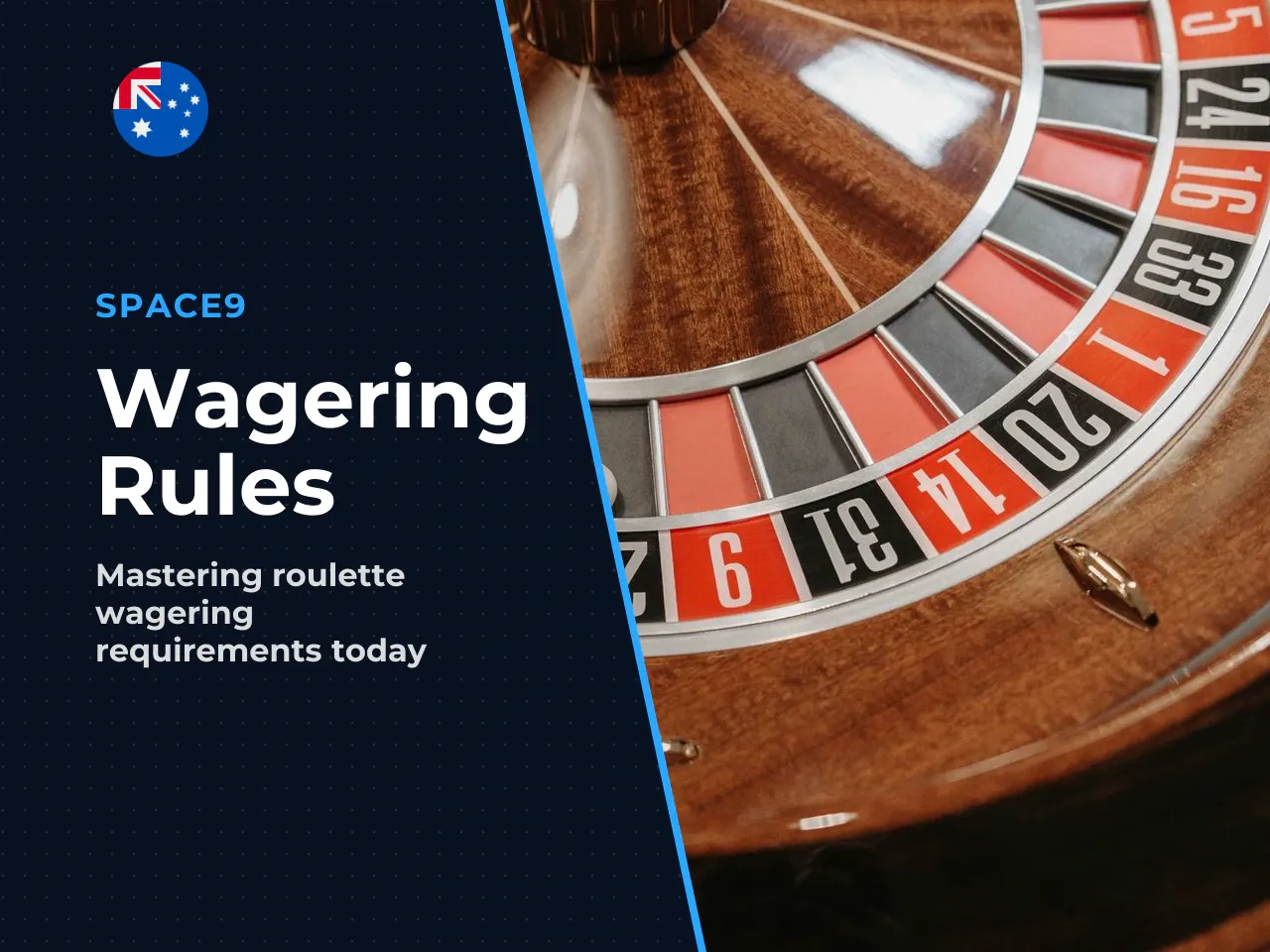
  • The wheel is a rotating disc divided into numbered pockets. On a European roulette wheel there are 37 pockets: 1 to 36 (alternating red and black) plus a single green 0. On an American wheel there are 38: the same 37 plus a green 00.
  • The ball (the "pill") is a small resin or ivory-substitute ball spun against the direction of the rotor. Where it settles determines the winning number.
  • The betting layout, printed on the roulette table or drawn on screen, is the grid used to place chips on individual numbers (inside bets) or on properties of numbers such as colour, parity and range (outside bets).
  • The payout schedule lists the fixed multiples paid on each winning bet. Because those multiples sit slightly below the true odds, the operator keeps a long-run margin, quantified as the house edge.
1.1 Defining roulette and its core

«The player's expected return is the probability of winning multiplied by the win coefficient, less the probability of losing multiplied by the loss coefficient.» - Commentary on the Statistical Estimation of Gambling Outcomes (2025)

That single definition is the entire analytical toolkit. Every "strategy" claim later in this guide gets tested against it.

Wheel sequence (European, clockwise from zero): 0, 32, 15, 19, 4, 21, 2, 25, 17, 34, 6, 27, 13, 36, 11, 30, 8, 23, 10, 5, 24, 16, 33, 1, 20, 14, 31, 9, 22, 18, 29, 7, 28, 12, 35, 3, 26. The numbers are deliberately not in ascending order. High and low, red and black are spread around the rim so that no arc of the wheel is systematically favourable. That is why sector bets (voisins du zéro, tiers, orphelins) exist on French layouts: they map physical arcs of the wheel rather than areas of the roulette table.

That single definition is the entire

1.2 European, American and French roulette in mathematical perspective

Only one structural difference materially changes player expectation: how many non-paying green pockets exist, and what happens to even-money bets when a green pocket lands. Adding a second zero changes no payout at all. It simply adds a losing outcome, which is why the American wheel returns materially less over time than the European version on identical bets.

«A European roulette wheel contains 37 pockets while the American wheel contains 38, producing house edges of 2.70% and 5.26% respectively.» - Commentary on the Statistical Estimation of Gambling Outcomes (2025)

The house edge, derived from first principles. Take a straight-up bet of one unit on a single number, European wheel.

  • Probability of winning: 1/37 ≈ 2.703%
  • Probability of losing: 36/37 ≈ 97.297%
  • Payout on a win: 35:1 (you receive 35 units profit plus your 1-unit stake back, so 36 units returned)
  • A mathematically fair payout would be 36:1

Expected value per unit staked:

EV = (1/37 × +35) + (36/37 × −1) = (35 − 36)/37 = −1/37 = −0.02703
House edge = (1 − 35/37) × 100% = 2/37 × 100% ≈ 2.70%

For the American wheel, with 38 pockets and the same 35:1 payout:

EV = (1/38 × +35) + (37/38 × −1) = (35 − 37)/38 = −2/38 = −0.05263
House edge = (1 − 35/38) × 100% = 3/38 × 100% ≈ 5.26%

Conclusion: choosing a single-zero wheel over a double-zero wheel cuts the operator's theoretical margin by a factor of roughly 1.95×. Nothing else you do at the table, no bet selection, no progression, no "hot number" reading, produces a comparable improvement. It is the only decision that changes the underlying probability structure rather than the shape of the variance.

French roulette uses the same 37-pocket wheel as european roulette, then adds two rules that apply only to even-money bets (red/black, odd/even, 1 to 18 / 19 to 36):

  • La Partage ("the sharing"): if zero lands, the player forfeits half the even-money stake and receives the other half back.
  • En Prison ("imprisonment"): if zero lands, the stake is held on the table for one further spin. If the next spin wins, the original stake is returned with no profit; if it loses, the stake is gone.

Either rule halves the effective loss on the zero outcome, which halves the edge on those bets:

House edge (even-money, La Partage) = (1/37 × 0.5) × 100% ≈ 1.35%

Note the limitation carefully, because most guides skip it: La Partage and En Prison do not apply to inside bets. A straight-up bet on a French table still carries a 2.70% edge. French roulette is only a 1.35% game if you confine yourself to even-money wagers. Slightly annoying, but that is how the rule is written.

The house edge, derived from first

Editorial note (updated): the frequently repeated claim that "French rules partially offset the house edge" is arithmetically demonstrable from the definition of expected value above, but we could not locate an Australian peer-reviewed source specifically modelling La Partage. Treat the 1.35% figure as a standard casino-mathematics derivation rather than a regulator-published statistic. You can verify it independently from the operator's own posted rules and payout table.

1.3 Table: comparison of European, American and French roulette

ParameterEuropean RouletteAmerican RouletteFrench Roulette
Pockets on wheel373837
Green zeros0 only0 and 000 only
Straight-up payout35:135:135:1
Straight-up probability1/37 = 2.703%1/38 = 2.632%1/37 = 2.703%
Even-money probability18/37 = 48.65%18/38 = 47.37%18/37 = 48.65%
La Partage / En PrisonNoNoYes (even-money bets)
House edge, inside bets2.70%5.26% (7.89% on the five-number "top line")2.70%
House edge, even-money2.70%5.26%1.35%
Theoretical RTP, even-money97.30%94.74%98.65%
VerdictGood defaultAvoid where an alternative existsBest available maths

Three variants, one takeaway: the wheel you sit at decides more than anything you do once the ball is rolling. If a lobby offers only american roulette, the honest answer is that the game costs you nearly twice as much per dollar wagered.

1.4 The Australian research landscape

Australian gambling research is comparatively strong on prevalence and harm, and comparatively thin on game-level mechanics. There is no Australian equivalent of a regulator-published RTP register for individual roulette variants, because online casino games are prohibited domestically (see Section 4). So this guide draws its mathematics from casino-probability derivations any reader can reproduce, and reserves cited Australian sources for participation, harm and regulatory enforcement, the areas where the local evidence base is genuinely authoritative.

Anatomy of a spin: round timeline, table layout and result capture

A roulette round is one of the most rigidly choreographed sequences in any casino, precisely because the moment betting closes is the moment that decides whether a wager is valid. The timeline matters practically: latency problems (Section 8) almost always show up as a bet that failed to register before the cut-off.

2.1 Roulette table layout: inside and outside fields

The layout is a 12 × 3 grid of the numbers 1 to 36 with the zero (and 00, on American tables) at the head, plus outside betting boxes along the side and foot.

Inside field (the numbered grid):

  • Individual numbers (straight up)
  • Boundaries between two adjacent numbers (split)
  • The edge of a row of three (street)
  • The intersection of four numbers (corner)
  • The edge between two rows (six line)

Outside field (bordering boxes):

  • Red / Black, the colour of the winning number
  • Even / Odd, parity
  • 1 to 18 / 19 to 36, low and high halves
  • Dozens, 1 to 12, 13 to 24, 25 to 36
  • Columns, the three vertical columns of twelve numbers

Colour coding: eighteen numbers are red, eighteen are black, and the zero (plus 00) is green. Green is not "a colour bet". It is the structural source of the house edge, which is exactly why no standard outside bet covers it.

2.1 Roulette table layout inside and

2.2 Step by step: chips, "no more bets" and result capture

  1. Betting window opens. The dealer or the software announces that the table is open. In live dealer roulette this window is usually 12 to 25 seconds depending on the variant; in Speed formats it can be as short as 10 to 12 seconds.
  2. Chips are placed. Players pick a denomination and click or place chips on the layout. Multiple simultaneous bets are allowed and settle independently.
  3. The wheel is spun and the ball released. In most live studios the ball is released while betting is still open.
  4. "No more bets." This announcement, backed by a hand gesture at a physical table and by a hard software cut-off online, fixes the point after which no new wager can be accepted or amended. Any instruction arriving after that timestamp is void.
  5. The ball settles. The pocket where the ball comes to rest is the winning number. In live formats the result is read optically (see Section 5.3) and pushed to the game engine.
  6. Result is recorded and settled. The winning number is logged with a timestamp, losing chips are cleared, and winning bets are paid according to the published payout table. In regulated environments that record is immutable, and it is the audit trail used to resolve disputes.

The discipline is identical to any evidentiary process: the fact is established at a defined instant, then documented immediately with a time reference and the identity of the responsible party. That is why "my bet didn't go through" disputes are usually resolvable. The server-side timestamp either precedes the cut-off or it does not.

2.2 Step by step chips, no

Bets in roulette: payouts, probabilities and expected value

Roulette betting splits neatly into two families. Inside bets target specific numbers and pay big. Outside bets cover large groups and pay small. Neither is cleverer than the other, and Section 3.4 explains why.

3.1 Inside bets: numbers and groups of numbers

BetNumbers coveredPayoutWin probability (European)Win probability (American)
Straight up135:12.70% (1/37)2.63% (1/38)
Split217:15.41% (2/37)5.26% (2/38)
Street311:18.11% (3/37)7.89% (3/38)
Corner (square)48:110.81% (4/37)10.53% (4/38)
Six line65:116.22% (6/37)15.79% (6/38)
Top line (basket)5 (0, 00, 1, 2, 3)6:1does not exist13.16% (5/38)

3.2 Outside bets: red or black, odd or even, columns and dozens

BetNumbers coveredPayoutWin probability (European)Win probability (American)
Red / Black181:148.65%47.37%
Even / Odd181:148.65%47.37%
1 to 18 / 19 to 36181:148.65%47.37%
Dozen122:132.43%31.58%
Column122:132.43%31.58%

3.3 House edge by bet type

On a European wheel, every bet listed above carries the same 2.70% house edge. On an American wheel every bet carries 5.26% except the five-number top line, the worst wager on any standard roulette table at 7.89%, because 6:1 on a 5/38 chance is a deeper shortfall than 35:1 on 1/38.

Derivation for the top line:

EV = (5/38 × +6) + (33/38 × −1) = (30 − 33)/38 = −3/38 ...

On a per-unit basis the correct calculation uses the fair payout of 6.6:1, giving an edge of 3/38 × (38/40) ≈ 7.89%. The practical instruction is simpler: never place it.

3.4 How to weigh payout against odds

This is the single most misunderstood point in roulette mathematics, so let us state it plainly. Expected value is the sum, across all outcomes, of (probability × net payoff). A payout coefficient scales the win branch only. Halve the payout and double the winning probability proportionally, and the edge is unchanged. Change the payout without changing probability, and the edge moves, which is exactly what Lightning-style variants do in both directions at once (see Section 5.6).

Coverage and payout move in opposite directions, and neither is "smarter". Bet one number and you collect 35:1 but see it land roughly once every 37 spins. Bet red and you cover 18 pockets, close to half the wheel, for 1:1. Both bets lose the same 2.70% of turnover in the long run. What differs is variance: how violently your balance swings while that expectation grinds out. Choosing between them is a decision about the session you want, not about the edge you face.

Turnover, not stake, determines expected loss. Flat-betting $5 across 100 European spins puts $500 through the table, for an expected loss of $500 × 2.70% = $13.50. The same 100 spins on an American wheel: $500 × 5.26% = $26.30. Double the spin rate, as Speed and Auto variants do, and you double the expected loss per hour without changing a single rule.

3.4 How to weigh payout against

4.1 The Interactive Gambling Act and prohibited services

The controlling instrument is the Interactive Gambling Act 2001 (Cth). Prohibited interactive gambling services include casino-style games such as online blackjack and roulette, plus pokies or slot machines, when supplied to a customer physically present in Australia. Licensed online wagering on sport and racing sits outside that prohibition. Online roulette does not.

Enforcement is administered by the Australian Communications and Media Authority (ACMA), which investigates complaints, refers matters, and asks Australian internet service providers to block access to offending sites. The ACMA maintains a published list of blocked domains, 133 websites blocked for IGA breaches as at the most recent consolidated listing, and reports enforcement activity quarterly.

4.1 The Interactive Gambling Act and

«Between October and December 2025 the ACMA made 69 breach findings: 38 for supplying prohibited interactive gambling services and 26 for unlicensed services.» - ACMA, Action on interactive gambling: October to December 2025 (January 2026)

Two practical consequences follow. First, an offshore site accepting Australian customers is by definition operating outside the Australian consumer-protection framework: no local licensing authority to escalate a dispute to, no mandated dispute-resolution scheme, no domestic recourse if funds are withheld. Second, ISP blocking and payment-channel friction make access itself unstable, and that is a separate risk from the gambling risk.

4.2 Prevalence of online gambling and casino-style games

Australian participation data shows a clear structural shift: overall gambling participation has declined, while online participation has grown sharply.

«Online gambling participation among Australian adults doubled from 8.1% to 17.5% between 2010–11 and 2019, despite an overall decline in gambling participation.» - Hing et al., Second National Study of Interactive Gambling in Australia, GambleAware NSW (2021)

That study also found interactive gamblers to be, on average, younger, more likely to be male, and more likely to gamble on multiple products. Product multiplicity matters because it is itself associated with elevated risk. Casino-style games including roulette appear in this data as a comparatively small but persistent participation category, accessed almost entirely through offshore sites given the domestic prohibition.

4.3 Gambling harms, consumer protection and support services

Harm is not binary and does not begin at "problem gambling". Contemporary Australian measurement treats harm as multi-domain, covering financial, relationship, emotional, health and work or study effects, and finds measurable harm well below the clinical threshold.

«Excessive prioritisation of gambling rises from 1.42% in the no-problem group to 14.15% in the low-risk group.» - Queensland Gambling Survey 2023

That gradient is the key finding for a roulette reader. The behaviour patterns associated with harm, chasing losses, extending sessions, prioritising gambling over other commitments, appear in people who would never describe themselves as having a problem. Roulette's structural features amplify this: continuous rapid play, near-miss visual feedback (the ball settling one pocket away), and progression systems that explicitly tell the player to increase stakes after losing.

Consumer protections available in Australia:

  • BetStop, the National Self-Exclusion Register. One registration excludes you from all licensed Australian online wagering providers for a chosen period, from three months to lifetime.
  • Deposit limits, time-outs and reality checks, mandated tools at licensed operators. A site that does not offer them is a red flag by itself.
  • Bank-level gambling blocks, now offered by most major Australian banks on cards and accounts.
  • Gambling Help Online, free and confidential counselling, available 24/7 by phone, web chat and email.
That gradient is the key finding

Disclaimer. This information is general in nature and does not replace advice from a qualified addiction or health professional. If you or someone close to you is having difficulty controlling gambling, free help is available: National Gambling Helpline 1800 858 858 or Gambling Help Online (24/7). In an emergency, call 000.

Roulette online: demo, real money and live dealer

5.1 Roulette demo and free roulette for practice

Roulette demo runs the same interface and the same payout table as a real-money game, but stakes are virtual credits with no monetary value. Its legitimate uses are narrow and real: learning the layout, learning which chip goes where, learning how a betting system behaves across several hundred spins without financial exposure. Running a Martingale progression 200 spins deep in a roulette simulator teaches more about variance than any written explanation, because you watch the bankroll graph collapse and recover in real time.

Two caveats deserve emphasis.

First, the RNG-identity question is less settled than marketing implies. Testing standards for random number generators are well established. GLI-11: Gaming Devices and Systems (Gaming Laboratories International) defines RNG testing requirements for gaming systems, and the UK Gambling Commission's remote technical standards require licensed games to produce demonstrably random outcomes. Neither, however, publicly requires an operator to prove that a demo build reuses the identical certified RNG implementation as the cash build. Call it an evidentiary gap rather than an accusation: at reputable, certified suppliers the demo is the same game binary with a virtual wallet. At unlicensed sites it is unverifiable by design, which is itself the relevant conclusion. Rather than claiming that any particular operator inflates demo results, the honest framing is that without certification you have no mechanism to check, and certification is precisely what an offshore site lacks.

Second, and better evidenced: free play is not risk-neutral.

5.1 Roulette demo and free roulette

«Repeated exposure to simulated gambling can normalise gambling behaviour and act as a transitional pathway to real-money wagering.» - Australian Gambling Research Centre, literature review on loot boxes and simulated gambling (2022)

That review, read alongside the Second National Study, indicates engagement with free roulette and other simulated products may increase the likelihood of moving to real-money play, particularly among younger users. So if you use demo roulette, use it as a maths laboratory with a defined stopping point. Not as entertainment.

5.3 Live roulette online: dealer-managed spins and streaming

Live dealer roulette replaces the random number generator with a physical event. A human croupier spins a real wheel in a purpose-built studio. The round is streamed in HD, some tables at high frame rates and with multiple camera angles. An optical character recognition (OCR) system, supported by wheel sensors, reads the winning pocket and pushes it to the game engine for settlement. An interactive chat channel lets players message the dealer during the stream.

The technical chain is worth spelling out, because it is what makes the format auditable: physical outcome, optical capture, timestamped database record, settlement. The player sees the outcome and the settlement, and the operator cannot alter the record between the two without leaving an audit trail. That is a genuinely different transparency model from RNG play, where fairness rests entirely on certification.

Modern live dealer roulette platforms also embed statistics panels, hot and cold number displays, favourite-bet storage, race-track layouts for sector betting and multi-table view, features with no analogue at a physical table. Our broader coverage of the sector's technology and operator landscape sits in our iGaming resource.

The social layer is the format's commercial engine, and it carries a documented behavioural risk. Streaming has moved gambling content out of casinos and onto general entertainment platforms, making roulette and similar games far more visible and accessible.

5.3 Live roulette online dealer-managed spins

«Watching live streams of gambling involving poker, poker machines, roulette and blackjack may increase the likelihood of gambling participation.» - Dr Mark Johnson, Game and Play Lab, University of Sydney (2025)

5.4 Live dealer vs RNG roulette: a direct comparison

ParameterLive Dealer RouletteRNG (virtual) Roulette
Outcome determined byPhysical ball settling in a wheel pocketCertified pseudo-random number generator
Round duration30 to 60 seconds (10 to 25s in Speed variants)Instant, the player controls the pace
Spins per hour (typical)40 to 60200 to 800+
Expected loss per hourLower, pace is capped by the dealerSubstantially higher at the same stake
Social elementLive chat with dealer and tableNone
Typical stake range~$0.50 to $1.00 minimum, up to $10,000+ on VIP tables~$0.10 minimum, commonly capped near $500
Fairness mechanismVisible physical outcome, multi-camera capture, licenceRNG certification (GLI, eCOGRA, iTech Labs)
Variant range12+ studio formats including multiplier gamesVery wide, including 3D and racetrack layouts
Bandwidth dependencyHigh, video streamMinimal
Bonus contributionFrequently 0%Frequently 0 to 10%

The pace difference in row four is the most financially significant line in the table, and the least discussed. Identical stakes, identical edge, four to ten times the turnover. Demo sits outside this comparison entirely: same rules, zero exposure, and useful only for learning the layout and testing a system.

5.5 How to verify a live stream is genuinely live

Some sites have historically presented pre-recorded footage as a live feed. In certified studios run by major suppliers this does not happen; the stream is genuinely live and the record is auditable. But since the failure mode exists at unlicensed operators, here is how to test it in under two minutes:

  1. Use the chat. Ask the dealer a specific, non-scripted question, the current time in the studio, or to confirm your screen name. A live dealer answers by name and on topic. A loop does not.
  2. Check the round ID and timestamp. Every legitimate live round carries a unique game or round ID and a server timestamp visible in the interface or history panel. Note one, refresh, and confirm the sequence is monotonic and current.
  3. Watch for continuity. Live studios show continuous shift behaviour: dealers change, adjust an earpiece, greet named players. Loops repeat micro-gestures on a fixed cycle.
  4. Cross-check the history panel against the video. The last five results in the statistics panel must match the numbers you personally watched land, in the same order.
  5. Confirm the supplier and the licence. Studio branding should identify the provider, and the provider's own site should list the operator as a licensed partner. Then verify the operator's licence in the regulator's register, not on the operator's own page.
  6. Test the betting cut-off against reality. In a genuine feed, "no more bets" is called while the ball is still in motion, and the cut-off matches the visible spin. Persistent mismatch between announcement and ball position is a serious warning sign.
5.5 How to verify a live

5.6 The live roulette variant matrix

VariantWheelDistinguishing mechanicEffect on mathsTypical pace
Live European RouletteSingle zero (37)Baseline live format, highest table traffic2.70% edge on all bets~45 to 60s
Live French RouletteSingle zero (37)La Partage and/or En Prison; racetrack and call bets1.35% on even-money bets only; 2.70% on inside bets~50 to 60s
Live American RouletteDouble zero (38)Extra 00 pocket, five-number top line available5.26% (7.89% on top line)~45 to 60s
Immersive RouletteSingle zeroHigh-frame-rate HD capture, multiple camera angles, slow-motion replay of the ball settlingUnchanged (2.70%)~60s
Lightning RouletteSingle zeroBefore each spin, 1 to 5 random numbers are struck by "lightning" and given multipliers from 50× to 500×Straight-up payout cut from 35:1 to 29:1 to fund multipliers~50s
XXXtreme Lightning RouletteSingle zeroUp to 10 lightning numbers, multipliers to 2,000×, chain-lightning re-strikesStraight-up reduced; maximum win 2,000× stake~50s
Mega RouletteSingle zeroMultiplier mechanic on up to 5 numbers, multipliers to 500×Straight-up payout reduced to fund multipliers~40 to 50s
Speed RouletteSingle zeroBetting window compressed to roughly 25 seconds, no dead time between roundsEdge unchanged; expected loss per hour rises sharply~25s
Auto / Slingshot RouletteSingle zeroNo dealer, an air-compression or spring mechanism launches the ballEdge unchanged; fastest live format~20 to 25s
Double Ball RouletteSingle zeroTwo balls in play per spinRoughly double the hit frequency, payouts about halved; edge unchanged~60s
Dual Play RouletteSingle zeroStream from a live table on a real casino floor, shared with in-venue playersUnchangedVenue-dependent
VIP / Salon PrivéSingle zeroPrivate or dedicated table, elevated betting limits (often $10,000+ maximum)Unchanged, limits change but the edge does not~60s+

The multiplier trade-off, made explicit. Lightning-family games look generous and are often marketed as high-RTP. The mechanic is a redistribution, not a gift: the straight-up payout drops from 35:1 to 29:1 across all numbers to fund occasional 50× to 2,000× hits on one to ten of them. The result is materially higher variance and, on most implementations, a higher house edge on inside bets than standard european roulette. If your objective is the lowest edge, French roulette on even-money bets remains the answer. If your objective is the chance of a large multiplier, Lightning is the product, but you pay for it in the base payout.

Suppliers worth recognising: Evolution (Immersive, Lightning, XXXtreme, Speed, Double Ball, Instant Roulette), Pragmatic Play Live (Mega Roulette, Speed variants), Playtech (Quantum Roulette, Age of the Gods), NetEnt Live (La Partage tables), Authentic Gaming (Dual Play streams from land-based venues). Provider identity is the single most useful proxy for stream authenticity, because these studios are independently audited and their partner lists are public.

The multiplier trade-off, made explicit. Lightning-family

Roulette strategy: systems, limits and cognitive biases

6.1 Martingale, Fibonacci, D'Alembert and flat betting

Every progression system reshapes the sequence of stakes. None alters the probability of any spin, because each spin is an independent trial. Expected loss stays at 2.70% (or 5.26%) of total turnover, and progressions increase turnover, so they increase expected loss in absolute dollars while making outcomes more extreme.

Martingale. Double the stake after every loss, revert to base after a win. Each win recovers all prior losses in the sequence plus one base unit.

StepStakeCumulative outlayNet profit if this step wins
1$5$5$5
2$10$15$5
3$20$35$5
4$40$75$5
5$80$155$5
6$160$315$5
7$320$635$5
8$640$1,275$5
9$1,280$2,555$5
10$2,560$5,115$5

Why it breaks in practice, two hard walls rather than one:

  1. Table limits. A typical even-money table with a $5 minimum carries a $500 maximum. Step 7 needs $320 (allowed). Step 8 needs $640 (refused). The progression is structurally incapable of completing. You are not risking $5,115 to win $5; you are risking $635 with no recovery mechanism beyond it.
  2. Bankroll. Absorbing ten consecutive losses requires $5,115 of available funds to secure $5 of profit. The probability of ten consecutive losses on red on a European wheel is (19/37)¹⁰ ≈ 0.13%, roughly once in every 780 attempts. Run the system daily and you will meet it. When you do, one sequence erases hundreds of $5 wins.

Fibonacci. Stakes follow 1, 1, 2, 3, 5, 8, 13, 21, 34 and so on, advancing one step after a loss and retreating two after a win. From a $5 unit: $5, $5, $10, $15, $25, $40, $65, $105, $170. Growth is slower than Martingale, so the table limit arrives later. But a single win no longer clears the full deficit, so recovery needs several wins. The same ceiling applies; it just arrives with a different shape.

D'Alembert. Increase by one unit after a loss, decrease by one after a win. From $5 with $5 increments: loss to $10, to $15, to $20; a win steps back to $15. Far gentler drawdown, far less explosive recovery. The system implicitly assumes wins and losses will roughly balance, which is exactly the gambler's fallacy dressed as arithmetic (Section 6.2).

Flat betting. Identical stake every spin. It is the only approach with an honest, calculable outcome: expected loss = turnover × house edge. $5 × 100 spins = $500 turnover, so −$13.50 expected on a European wheel, or −$26.30 on an American one. It cannot generate a positive expectation, but it also cannot generate a catastrophic single-session loss, and it makes your bankroll requirement predictable in advance. For anyone playing for entertainment rather than profit, it is the defensible choice.

What all four share: they are bankroll-management schemes, not edge-reduction schemes. Choosing a French wheel over an American one improves your expected return by 3.91 percentage points. Choosing Martingale over flat betting improves it by exactly zero.


Why it breaks in practice, two

6.2 Why past spins cannot predict the next result

The gambler's fallacy is the belief that a run of one outcome makes the opposite outcome more likely, that after eight reds, black is "due". On a fair wheel this is false by construction. Outcomes are independent Bernoulli trials, and the probability distribution of spin n+1 is entirely unaffected by spins 1 through n. Long streaks are not anomalies in finite samples; they are a statistical requirement of randomness.

The mirror-image error is the hot-hand fallacy: the belief that a streak will continue, that a number is "hot" and will keep landing. Both are the same misperception of independence, and research shows they surface in the same population depending on how the game is framed.

6.2 Why past spins cannot predict

«In single-prize games the gambler's fallacy predominates, while in multi-prize games the hot-hand effect dominates; both rest on a misperception of independent random events.» - Judgment Error in Lottery Play: When the Hot-Hand Meets the Gambler's Fallacy

This matters commercially, not just academically, because live roulette interfaces display hot and cold number panels by default. Those panels accurately describe past frequency and tell you nothing about the next spin. They exist because they lift engagement, and they work by activating precisely the two biases above.

What long-run data actually shows. Across very large samples, observed frequencies converge tightly on theory. Aggregated simulator datasets running into the billions of spins report each of the 37 European pockets landing within a fraction of a percentage point of the theoretical 2.703%, with red at roughly 48.65%, black at roughly 48.65% and green at roughly 2.70%. Over 100 spins a single number can land eight times and feel either overdue or unstoppable. Over 10,000 it returns to 2.703% and stays there. The law of large numbers describes the aggregate. It promises nothing about your session.

This matters commercially, not just academically

6.3 Fact check: five roulette myths, corrected

MythReality
"The dealer can control where the ball lands."No regulatory or scientific source establishes that a dealer can reliably determine a roulette outcome in live play. Studios rotate dealers, vary release points and monitor wheel bias precisely to remove the possibility. Casinos also lack motive: the edge sits in the payout table, not the spin.
"Hot and cold numbers predict the next spin."They describe past frequency in a sample. On a fair wheel each pocket's probability on the next spin stays at 1/37.
"After eight reds, black is due."Independent trials have no memory. The probability of red on the next spin remains 18/37.
"Betting red and black at once is risk-free."It covers 36 of 37 pockets and returns your stake on 36/37 outcomes while losing both stakes on zero, so the same 2.70% edge, with the extra problem that most bonus terms explicitly void such low-risk patterns.
"A strategy can beat the house edge long-term."Expected value is negative on every standard bet. No stake sequence turns a negative expectation into a positive one; systems only redistribute variance.

Bonuses and wagering: why roulette rarely clears a bonus

Most roulette guides skip this section, and it is the one that costs readers real money. Bonus terms are written with pokies in mind, and roulette is deliberately disadvantaged inside them.

Game weighting (contribution). Wagering requirements are expressed as a multiple of the bonus, but each game contributes a different percentage of its turnover toward that requirement.

Game typeTypical contribution to wagering
Pokies / slots100%
Scratch cards, keno100%
Roulette (RNG)0 to 10%
Roulette (live dealer)Frequently 0%
Blackjack5 to 10%
Video poker0 to 10%
Baccarat, craps0 to 10%

Worked example. A $100 bonus with a 35× wagering requirement demands $3,500 of qualifying turnover. On pokies at 100% weighting, that is $3,500 wagered. On roulette at 10% weighting, it becomes $35,000 wagered. At a 2.70% house edge, $35,000 of turnover carries an expected loss of $945, to unlock a $100 bonus. If live roulette contributes 0%, no amount of play clears the requirement at all.

Four additional restrictions that commonly void bonuses:

  1. Maximum bet while a bonus is active, often $5 to $10 per spin. Exceeding it once can forfeit the entire bonus and any winnings attached to it.
  2. Prohibited low-risk betting, such as covering red and black simultaneously, or betting more than a set proportion of the layout (commonly 70%). Most terms ban it outright.
  3. Maximum cash-out from bonus funds, frequently capped at 3× to 5× the bonus, regardless of what you win.
  4. Time limits, usually 7 to 30 days to complete wagering, after which remaining bonus funds and winnings are removed.

The honest conclusion: for roulette specifically, bonuses are usually value-destroying. If you intend to play roulette, decline the bonus, keep your funds withdrawable, and sidestep the max-bet and low-risk-betting traps entirely. A rare case where the mathematically optimal move is also the simplest one.

Worked example. A 100 bonus with

«Whenever a bonus and a bet limit appear in the same paragraph, read the limit first. The bonus is the offer; the limit is the price.» - Claire Bennett, senior casino content editor (editorial persona)

Technical requirements: devices, bandwidth and latency

8.1 Mobile play: devices and compatibility

Live roulette is now consumed overwhelmingly on mobile, and the format's interface constraints are genuine engineering problems rather than cosmetic ones. Published Australian gambling research focuses on participation, product type and harm rather than device-level telemetry, so device-share figures specific to roulette should be treated as industry-reported rather than independently verified. The granular Australian dataset does not currently exist in the public literature.

What is documented is what a competent mobile implementation requires. The W3C Mobile Accessibility Task Force guidance requires touch targets sized for finger input, adequate spacing between adjacent controls, and full operability across orientation changes. That is non-trivial when the interface is a 12 × 3 grid of adjacent betting cells where a mis-tap places a real wager on the wrong number. The same guidance treats live video as a content block that must reflow responsively and keep critical controls and captions outside the video frame on small displays. CSS Media Queries Level 4 provides the technical basis for switching a roulette stream between full-screen, picture-in-picture and embedded layouts by viewport width, orientation and pixel density.

Practical mobile checklist:

  • Zoomable betting grid, or a dedicated neighbours and racetrack view for precision placement
  • Bet confirmation step, or an undo window, before the cut-off
  • Portrait mode that keeps the video visible without hiding chip denominations
  • Persistent session state, since a dropped connection should not lose placed bets
  • iOS 15+ or Android 10+, HTML5 player, hardware H.264/HEVC decoding, minimum 4 GB RAM
  • Native app or fully responsive site. A desktop-only layout squeezed onto a phone is a reliable marker of a low-quality operator
8.1 Mobile play devices and compatibility

8.2 Internet speed and quality for live dealer roulette

Bandwidth determines picture quality. Latency determines whether your bet is accepted. Different problems, and most guides conflate them.

Stream qualityMinimum downstreamRecommendedAcceptable pingNotes
SD 480p3 to 5 Mbps5 Mbps< 150 msBall trajectory hard to follow, heavy compression
HD 720p605 Mbps8 to 10 Mbps< 100 msComfortable baseline for a single table
Full HD 1080p6010 Mbps15 Mbps< 80 msStandard for Immersive-class tables
Multi-table / 4K25 Mbps25 to 35 Mbps< 50 msRequired for multi-camera and multi-view play

These thresholds align with published streaming documentation. Amazon CloudFront's live-streaming guidance cites roughly 25 Mbps downstream for 4K playback and 5 Mbps for HD, while the Twitch Help Center publishes 4,000 to 6,000 kbps upload for 1080p60 and about 3,500 kbps for 720p60 as broadcaster-side encoder rates. Read together, they bracket the realistic range for a consumer receiving an interactive HD casino stream.

On latency, specifically. Above roughly 150 ms ping, round-trip delay can push your bet instruction past the server-side cut-off. You will see the chip land on screen, then watch it vanish when "no more bets" is processed. The bet was never valid. This is the most common cause of "the casino cancelled my winning bet" complaints, and it is a network problem, not a fairness problem. Place bets early in the window rather than at the last second, and avoid mobile data with a fluctuating signal.

Australian context, stated carefully. Household broadband capability varies substantially by connection technology and location, and remote or some regional users on fixed wireless or satellite may sit below the 1080p threshold or above the 100 ms ceiling. We have not identified a published Australian dataset measuring live-casino stream performance by NBN technology type, so read this as a general infrastructure observation to verify against your own speed and latency test, not as a sourced statistic.

These thresholds align with published streaming

8.3 Troubleshooting lag: an ordered checklist

  1. Run a speed test and a ping test to a nearby server. Record both numbers, not just download speed.
  2. Switch from Wi-Fi to Ethernet, or move within 3 to 4 metres of the router.
  3. Drop stream quality manually to 720p. A stable SD feed beats a stuttering HD one, because the cut-off is what matters.
  4. Close other bandwidth consumers. Cloud backup and video calls are the usual culprits.
  5. Prefer the native app over a browser, since hardware decoding is generally better managed.
  6. Place bets in the first half of the betting window as standard practice.
  7. If latency stays above 150 ms, do not play live. The format is unsuitable on that connection.
8.3 Troubleshooting lag an ordered checklist

Payments, KYC and withdrawals in the Australian context

Payments are where the legal position in Section 4 becomes concrete. Because online casino games are prohibited domestically, there is no Australian-licensed roulette operator to pay, and Australian banks and payment providers increasingly decline or block gambling-coded transactions to offshore casino merchants. Declined cards, reversed deposits, funds stranded with an operator that has no local dispute pathway: these are not incidental risks. They are the predictable outcome of transacting outside the regulated perimeter.

For readers researching the payments landscape, or playing lawfully in another jurisdiction, the methods commonly discussed in an Australian context are:

9. Payments, KYC and withdrawals in
MethodDeposit speedWithdrawal speedNotes
PayID / OskoNear-instant1 to 2 business days where supportedAustralian real-time bank rails, not available for prohibited services
Debit / credit cardInstant3 to 5 business daysAustralian banks routinely block gambling merchant codes; credit cards are prohibited for licensed online wagering
Neosurf / prepaid vouchersInstantDeposit onlyNo withdrawal path, so winnings must exit by another method
Bank transfer1 to 2 business days2 to 5 business daysSlowest, most traceable
Cryptocurrency10 to 60 minutesOften under 24 hoursFast, but adds price volatility and removes chargeback protection entirely
E-walletsInstant0 to 2 business daysAvailability for casino merchants is restricted in many cases

KYC (Know Your Customer) verification is mandatory at any licensed operator: government photo ID, proof of address, and proof of payment-method ownership. Complete it straight after registration rather than at first withdrawal. Verification requested after a win is the most common cause of multi-week payout delays. Source-of-funds documentation may also be requested for larger withdrawals.

Bank-level gambling blocks are available from most major Australian banks and can be applied to your own card in a few taps. Combined with BetStop registration, they form the most effective practical barrier available to someone who has decided to stop.

KYC Know Your Customer verification is

How to choose a roulette casino and table online

10.1 The six-point platform checklist

  1. Licence, verified in the regulator's register. Match the licence number and the legal entity name. Not the badge in the footer.
  2. Table inventory and limits. Count the roulette tables. Confirm European, French and American availability, whether La Partage applies, the supplier behind each live table, and the minimum and maximum per bet class. A single table with no published limits is not an offer, it is a trap.
  3. Mobile capability. Does roulette open and function fully on iOS and Android, with betting history, statistics and limit tools intact? Test before depositing.
  4. Payout speed, in two parts. Processing time on the operator side and crediting time on the payment provider side. Note withdrawal limits and whether KYC is required before the first withdrawal.
  5. Support channels and measured response. Live chat, email and phone. Note operating hours, then time the first reply to a specific technical question.
  6. Bonus terms, read in full. Wagering multiple, game contribution for roulette, maximum bet under bonus, maximum cash-out, expiry, prohibited betting patterns. If roulette contributes 0%, the bonus is irrelevant to you.

Anyone comparing three to five brands can run this list in about twenty minutes per site. That is the whole method: game variety, betting limits, mobile compatibility, customer support, deposit convenience and payout times, checked against the operator's own published pages rather than a marketing summary.

10.1 The six-point platform checklist. 1

10.2 Who should skip online roulette entirely

  • Anyone physically present in Australia looking for real-money play, since the service is prohibited and there is no local recourse.
  • Anyone whose connection sits above 150 ms ping, because live rounds will void bets.
  • Anyone chasing a loss today. That is the worst possible starting condition, and Section 4.3 explains why.
  • Anyone treating roulette as an income source. The expected value is negative on every standard bet, without exception.

10.3 Session discipline that actually works

  • Set a loss limit in dollars before you open the table, and set it at the operator level so it is enforced rather than merely intended.
  • Set a time limit and use the reality-check tool. Live roulette's pacing is designed to make sessions feel shorter than they are.
  • Calculate expected loss in advance. Stake × spins × house edge. That figure is the price of the entertainment. If it is higher than you would pay for any other two hours of entertainment, adjust the stake or the wheel, not the strategy.
  • Never increase stakes to recover a loss. That instruction is the operational core of Martingale and the behavioural core of gambling harm, and the Queensland data in Section 4.3 shows it appears well before anyone considers themselves at risk.
  • Treat the hot and cold panel as decoration. It is engagement design, not information.

Age and access: the legal gambling age is 18+ in Australia and across most jurisdictions where online roulette is licensed, and 21+ in several US states. Licensed operators must verify age before play.

10.3 Session discipline that actually works

Support in Australia: Gambling Help Online, free 24/7 counselling by phone, web chat and email. National Gambling Helpline: 1800 858 858. BetStop, the National Self-Exclusion Register, one registration excluding you from all licensed Australian online wagering providers. Lifeline: 13 11 14.

FAQ: roulette online, live dealer and the rules that apply

Appendix A: fact-check of claims commonly repeated in roulette guides

Claim as commonly publishedVerdictCorrected position
"A number that lands once in 37 spins pays 35-to-1 when 36-to-1 would be fair."SupportedAccurate, and it is the correct explanation of the house edge: probability 1/37, payout 35:1 plus stake returned equals 36 units against a fair 37. Retained as the core derivation in Section 1.2.
"La Partage returns half your bet if the ball lands on zero."Supported, with an omissionCorrect for even-money bets only. Most published versions omit that inside bets are unaffected, leaving readers to assume a 1.35% edge across the whole table. Corrected in Section 1.2.
"In live dealer games the physical ball determines the result, not an algorithm."SupportedAccurate. The outcome is a physical event captured optically and settled from a timestamped record, a materially different transparency model from certified RNG play.
"Live roulette works fine on connections as slow as 4 Mbps."Needs verification, misleadingAt 4 Mbps the feed compresses to 360p or 480p with buffering, making the ball hard to follow, and leaves no headroom for the latency spikes that void bets. Corrected guidance: minimum 5 Mbps, recommended 15 Mbps+, ping under 100 ms.
"The live dealer is really just a pre-recorded video feed."Contradictory, true only of fraudulent sitesAt certified suppliers the stream is live and auditable. Because the failure mode is real at unlicensed operators, we replaced the blanket claim with the six-step verification procedure in Section 5.5.
"European wheels give 37-to-1 odds on a single number, American 38-to-1."ImpreciseThe probability is 1 in 37 (European) and 1 in 38 (American); the payout is 35:1 on both. Conflating the two is what makes the house edge invisible to readers. Corrected throughout Section 3.
"Lightning-style variants have higher RTP because of the multipliers."ContradictoryMultipliers are funded by cutting the straight-up payout from 35:1 to 29:1 across all numbers. Variance rises sharply, and on most implementations the inside-bet edge is higher than standard European roulette. Corrected in Section 5.6.
"There's no system that beats roulette long-term."SupportedCorrect, and consistent with expected-value theory: no stake sequence converts a negative expectation into a positive one.

About this guide. Compiled by the editorial team behind our iGaming research coverage, with editorial review by Claire Bennett, senior casino content editor (editorial persona). Probability and house-edge figures here are standard casino-mathematics derivations reproducible from the formulas shown. Participation, harm and enforcement figures are attributed to the named Australian sources. Where a claim could not be tied to a published source, specifically device-share telemetry for roulette, Australian broadband performance for live casino streams, and demo-versus-cash RNG identity, that limitation is stated in the text rather than papered over.

General disclaimer. This article is informational and educational. It is not legal, financial, tax or medical advice, and it does not encourage participation in prohibited services. Gambling involves risk of financial loss, and no strategy described here can produce a positive expected return. 18+. If gambling is causing harm, call 1800 858 858 or visit Gambling Help Online.

About this guide. Compiled by the